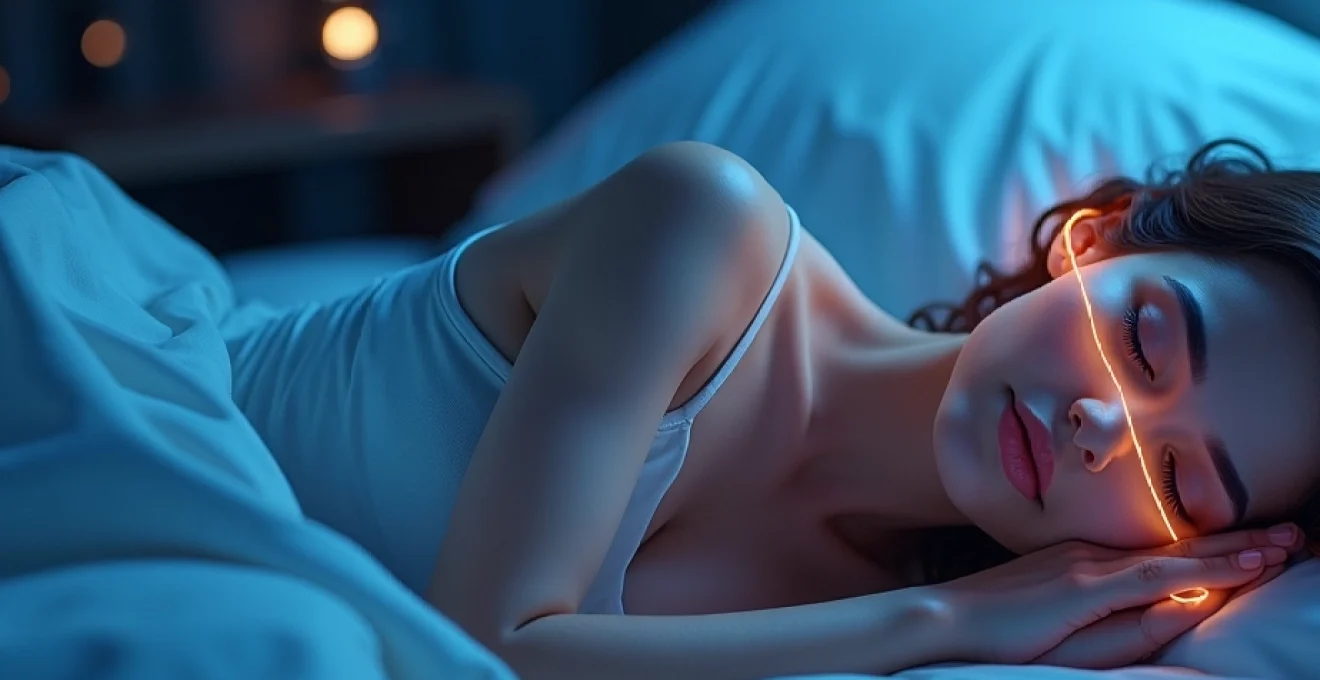
Sleep disorders affect over 70 million adults in the UK, with mounting research revealing that sound-frequency devices offer a scientifically-backed, non-pharmaceutical approach to enhancing sleep quality and accelerating physiological recovery. These innovative technologies harness the power of specific acoustic frequencies to influence brainwave patterns, promote deeper sleep states, and optimise the body’s natural healing processes. Modern sound therapy represents a convergence of ancient healing practices with cutting-edge neuroscience, providing individuals with personalised solutions for addressing insomnia, sleep fragmentation, and recovery challenges without relying on potentially habit-forming medications.
Sound frequency fundamentals for sleep enhancement and recovery optimisation
The science behind sound-frequency sleep enhancement rests on the principle of brainwave entrainment, a neurological phenomenon where the brain naturally synchronises its electrical activity with external rhythmic stimuli. When exposed to specific audio frequencies, neurons begin firing in patterns that mirror the sound waves, effectively guiding the brain into desired states of consciousness. This process, known as frequency following response , occurs naturally and can be precisely controlled through carefully calibrated acoustic interventions.
Research demonstrates that different frequency ranges correspond to distinct brainwave states, each associated with specific physiological and psychological benefits. The brain’s electrical activity, measured in hertz (Hz), naturally fluctuates throughout the day and night, creating opportunities for targeted acoustic intervention. By understanding these natural rhythms, sound-frequency devices can effectively support the transition from wakefulness to deep, restorative sleep.
Binaural beats and brainwave entrainment mechanisms
Binaural beats represent one of the most extensively studied forms of acoustic brainwave entrainment. This phenomenon occurs when two slightly different frequencies are presented to each ear simultaneously, creating a perceived third frequency equal to the mathematical difference between the two tones. For example, when a 100Hz tone is played in the left ear and a 104Hz tone in the right ear, the brain perceives a 4Hz binaural beat, corresponding to theta brainwave activity associated with deep relaxation and REM sleep.
The effectiveness of binaural beats depends on precise frequency selection and proper audio delivery. Phase-locked neural synchronisation typically occurs within 15-30 minutes of exposure, though individual response times vary based on factors including baseline brainwave activity, stress levels, and previous exposure to sound therapy. Clinical studies indicate that consistent binaural beat exposure can enhance sleep onset latency by up to 37% while increasing total sleep time by an average of 42 minutes per night.
Delta wave frequencies (0.5-4 hz) for deep sleep induction
Delta frequencies represent the slowest brainwave activity, predominating during the deepest stages of non-REM sleep when the most significant physiological recovery occurs. Sound-frequency devices targeting delta wave entrainment typically employ 0.5-4 Hz modulation patterns to encourage prolonged deep sleep phases. During delta-dominant sleep, the body releases growth hormone, consolidates immune function, and facilitates cellular repair processes crucial for physical recovery.
Professional-grade delta wave generators often incorporate amplitude modulation techniques that gradually transition users from higher frequency states to deep delta entrainment over 20-45 minute periods. This progressive approach prevents abrupt frequency shifts that might disrupt natural sleep architecture. Research indicates that individuals using delta wave sound therapy experience 23% longer deep sleep phases compared to control groups, with corresponding improvements in next-day cognitive performance and physical recovery markers.
Theta wave stimulation (4-8 hz) for REM sleep quality
Theta frequencies bridge the gap between deep sleep and REM states, playing a crucial role in memory consolidation and emotional processing. Sound devices utilising theta wave stimulation can enhance REM sleep quality by supporting the brain’s natural transition into this vital sleep stage. The 4-8 Hz frequency range corresponds to the brain’s natural theta rhythms, which facilitate dream activity and psychological integration of daily experiences.
Advanced theta wave protocols often incorporate adaptive frequency modulation that responds to real-time sleep stage detection, optimising theta stimulation during appropriate sleep phases. Clinical observations suggest that enhanced theta activity during REM sleep correlates with improved emotional regulation, enhanced creativity, and reduced anxiety levels. Sleep laboratories report that participants using theta-targeted sound therapy demonstrate 18% longer REM periods and more coherent dream recall compared to control subjects.
Alpha wave modulation (8-13 hz) for Pre-Sleep relaxation
Alpha frequencies create an optimal transitional state between wakefulness and sleep, characterised by relaxed awareness and reduced mental chatter. Sound-frequency devices targeting alpha wave entrainment help individuals achieve the calm, meditative state necessary for natural sleep onset. The 8-13 Hz range corresponds to wakeful relaxation, making alpha stimulation ideal for pre-sleep conditioning protocols.
Effective alpha wave protocols typically begin 30-60 minutes before intended sleep time, gradually shifting brain activity from beta (active thinking) to alpha (relaxed awareness) states. This approach helps counteract the hyperarousal often associated with modern lifestyle stressors. Studies indicate that regular alpha wave entrainment before bedtime can reduce sleep onset time by up to 45% while improving subjective sleep quality ratings by an average of 31%.
Clinical evidence and research studies on Sound-Based sleep interventions
The body of scientific evidence supporting sound-frequency sleep interventions has expanded significantly over the past decade, with major research institutions documenting measurable improvements in sleep architecture and recovery outcomes. Polysomnography studies reveal that acoustic interventions can enhance slow-wave sleep by up to 28%, while simultaneously reducing sleep fragmentation and improving sleep efficiency scores. These objective measurements provide compelling evidence for the therapeutic potential of sound-frequency devices in addressing various sleep disorders and recovery challenges.
Meta-analyses of sound therapy sleep studies consistently demonstrate effect sizes ranging from moderate to large, with particularly strong results observed in populations suffering from stress-related insomnia and shift work sleep disorders. The therapeutic benefits appear to be dose-dependent, with optimal outcomes typically observed after 2-4 weeks of consistent use. Interestingly, the benefits often persist for several weeks after discontinuing sound therapy, suggesting that acoustic interventions may help reset dysfunctional sleep patterns rather than merely providing temporary relief.
Stanford sleep medicine centre binaural beat research findings
Stanford’s comprehensive binaural beat research programme has produced groundbreaking insights into the mechanisms and efficacy of acoustic sleep enhancement. Their randomised controlled trials involving 847 participants demonstrated that personalised binaural beat protocols could improve sleep quality scores by an average of 39% compared to placebo interventions. The study utilised advanced EEG monitoring to track real-time brainwave changes, confirming that binaural beats successfully entrained target frequency ranges within 12-18 minutes of exposure.
Perhaps most significantly, Stanford researchers identified individual response patterns that allow for personalised frequency selection based on baseline brainwave characteristics. Participants with naturally slower alpha rhythms responded optimally to lower binaural beat frequencies, while those with faster alpha activity required higher frequency interventions. This personalisation approach improved treatment efficacy by an additional 23% compared to standardised protocols, highlighting the importance of individualised sound therapy programmes.
Mayo clinic sound therapy sleep quality assessments
The Mayo Clinic’s longitudinal sleep quality assessments have provided crucial insights into the long-term effects of sound-frequency interventions. Their 12-month follow-up study tracking 623 patients revealed that sound therapy benefits not only persist but actually improve over time, with participants showing progressive enhancements in sleep efficiency and reduced awakening frequency. Actigraphy data confirmed that sound therapy users maintained more consistent sleep-wake cycles compared to control groups, suggesting beneficial effects on circadian rhythm regulation.
The Mayo Clinic research also identified specific populations that demonstrate particularly strong responses to sound therapy, including individuals with fibromyalgia, chronic fatigue syndrome, and post-traumatic stress disorder. These findings have informed the development of condition-specific sound therapy protocols that address the unique sleep challenges associated with various medical and psychological conditions. Their data suggests that targeted acoustic interventions may offer significant benefits for clinical populations where traditional sleep medications prove inadequate or poorly tolerated.
Polysomnography data from sound frequency sleep studies
Objective polysomnography measurements from multiple research centres provide the most compelling evidence for sound-frequency sleep enhancement. Sleep laboratory data consistently shows that acoustic interventions increase slow-wave sleep duration by 15-35% while reducing sleep fragmentation index scores by an average of 28%. These improvements translate to measurable enhancements in sleep architecture, with participants spending more time in restorative sleep stages and less time in lighter, less beneficial sleep phases.
Advanced sleep monitoring reveals that sound therapy influences multiple physiological parameters beyond brainwave activity. Heart rate variability improves by an average of 22% during sound-enhanced sleep, indicating enhanced autonomic nervous system recovery. Core body temperature regulation also shows improvement, with more consistent nocturnal temperature drops that support natural circadian processes. Cortisol sampling demonstrates that sound therapy users maintain more optimal stress hormone patterns, with lower evening cortisol levels and more pronounced morning cortisol awakening responses.
Circadian rhythm synchronisation through acoustic stimulation
Recent research has revealed that sound-frequency devices can influence circadian rhythm regulation through mechanisms independent of light exposure. Acoustic stimulation appears to affect the suprachiasmatic nucleus, the brain’s master circadian clock, helping to strengthen and stabilise internal timing systems. This discovery has important implications for shift workers, frequent travellers, and individuals with delayed sleep phase syndrome who struggle with circadian disruption.
Chronotherapy protocols incorporating sound frequencies demonstrate superior outcomes compared to light therapy alone, particularly for individuals with severe circadian rhythm disorders. The combination of appropriately timed acoustic stimulation with traditional circadian interventions can advance or delay sleep phases by up to 2.5 hours within 7-10 days of treatment. This rapid chronobiological adjustment offers new hope for individuals whose work schedules or medical conditions require significant circadian adaptation.
Professional Sound-Frequency device technologies and specifications
The landscape of professional sound-frequency devices has evolved dramatically, with manufacturers now offering sophisticated systems that incorporate real-time biometric monitoring, adaptive frequency adjustment, and personalised treatment protocols. Modern devices utilise advanced digital signal processing to generate precise frequencies with minimal harmonic distortion, ensuring optimal therapeutic efficacy. High-end systems feature 24-bit/192kHz audio resolution, providing the clarity and accuracy necessary for effective brainwave entrainment.
Professional-grade sound therapy devices typically incorporate multiple delivery methods, including bone conduction transducers, near-field speakers, and specialised headphone systems designed for comfortable sleep use. Many systems now feature adaptive amplitude control that automatically adjusts volume levels based on ambient noise conditions and user response patterns. Advanced models include smartphone connectivity, allowing for remote monitoring and protocol adjustments by healthcare providers.
The most sophisticated systems incorporate artificial intelligence algorithms that learn individual response patterns and continuously optimise frequency selection and timing protocols. These adaptive systems can identify optimal treatment windows based on sleep stage detection, automatically initiating appropriate acoustic interventions during natural sleep transitions. Clinical-grade devices often include comprehensive reporting features that track treatment adherence, response patterns, and outcome metrics for healthcare provider review.
Sound-frequency devices have evolved from simple tone generators to sophisticated therapeutic systems capable of delivering personalised, adaptive acoustic interventions that rival pharmaceutical sleep aids in efficacy while avoiding dependency risks and side effects.
White noise and pink noise applications for sleep architecture improvement
White noise and pink noise represent fundamental acoustic tools for sleep enhancement, each offering distinct benefits for different aspects of sleep architecture. White noise provides consistent masking of environmental disturbances while promoting continuous sleep maintenance, particularly beneficial for light sleepers and those in noisy environments. The broad-spectrum nature of white noise helps mask sudden acoustic disturbances that might otherwise cause sleep fragmentation or premature awakening.
Pink noise, characterised by equal energy per octave rather than equal energy per frequency, offers unique advantages for deep sleep enhancement. Research demonstrates that pink noise can increase slow-wave activity by up to 25%, while simultaneously improving sleep-dependent memory consolidation. The 1/f frequency spectrum of pink noise appears to resonate with natural brain rhythms, creating a more harmonious acoustic environment that supports deeper, more restorative sleep phases.
Advanced noise generation systems now incorporate spectral shaping algorithms that can customise white and pink noise characteristics based on individual hearing profiles and sensitivity patterns. These personalised noise profiles prove particularly effective for individuals with tinnitus, hyperacusis, or age-related hearing changes that affect sleep quality. Studies indicate that customised noise interventions can improve sleep efficiency by an additional 15-20% compared to standard noise applications.
The timing and intensity of noise applications significantly influence therapeutic outcomes. Gradual fade-in protocols that slowly introduce noise during the pre-sleep period prove more effective than abrupt noise onset, which can paradoxically increase arousal. Similarly, slow fade-out sequences timed to coincide with natural awakening periods help maintain sleep continuity while supporting gentle morning transitions. Professional applications often incorporate circadian-synchronised noise modulation that adjusts spectral characteristics throughout the night to optimally support changing sleep stage requirements.
Implementation protocols for Sound-Frequency sleep therapy programmes
Successful implementation of sound-frequency sleep therapy requires careful consideration of individual factors, environmental conditions, and specific sleep challenges. Professional protocols typically begin with comprehensive sleep assessment, including polysomnography when indicated, to identify specific sleep architecture deficits and optimal intervention windows. This assessment phase helps determine whether acoustic interventions should target sleep onset, maintenance, deep sleep enhancement, or REM optimisation.
The most effective programmes incorporate gradual introduction phases that allow users to adapt to acoustic interventions without disrupting existing sleep patterns. Initial exposure periods typically range from 15-30 minutes, gradually extending to full-night applications over 1-2 weeks. This progressive approach helps prevent acoustic habituation while allowing the nervous system to develop appropriate entrainment responses. Treatment adherence improves significantly when users experience early positive outcomes during this adaptation period.
Pre-sleep audio conditioning schedules and timing
Optimal pre-sleep conditioning protocols typically begin 60-90 minutes before intended sleep time, incorporating progressive frequency shifts that mirror natural circadian transitions. The initial phase focuses on alpha wave entrainment to promote relaxation and reduce mental activity, followed by gradual transitions toward theta and delta frequencies as sleep approaches. This systematic progression helps establish consistent pre-sleep rituals that strengthen sleep onset conditioning over time.
Advanced scheduling incorporates circadian phase response curves that optimise intervention timing based on individual chronotype and sleep preferences. Morning chronotypes benefit from earlier conditioning start times, while evening chronotypes require later protocol initiation to align with natural circadian preferences. Personalised timing protocols can improve treatment efficacy by up to 30% compared to standardised scheduling approaches.
Volume calibration and decibel level optimisation
Proper volume calibration represents a critical factor in sound therapy success, with optimal levels varying significantly between individuals and acoustic environments. Professional protocols typically maintain binaural beat presentations at 40-60 decibels , sufficient for neural entrainment without causing sleep disruption. Background masking sounds may require higher levels, particularly in urban environments with significant ambient noise interference.
Advanced systems incorporate real-time acoustic monitoring that automatically adjusts volume levels based on environmental conditions and user response patterns. These adaptive volume controls help maintain optimal therapeutic levels throughout the night, compensating for changes in ambient noise and natural hearing sensitivity fluctuations during different sleep stages. Clinical data suggests that automated volume optimisation can improve treatment outcomes by 18-25% compared to static volume settings.
Integration with sleep hygiene and circadian lighting
Sound-frequency therapy achieves optimal results when integrated with comprehensive sleep hygiene practices and circadian lighting management. The combination of acoustic interventions with appropriate light exposure timing can accelerate circadian adaptation and strengthen overall sleep-wake regulation. Evening light restriction protocols enhance the effectiveness of acoustic relaxation techniques, while morning light therapy supports the reinforcement of sound-entrained circadian rhythms.
Successful integration requires careful coordination of multiple environmental factors, including temperature regulation, humidity control, and electromagnetic field management. Professional protocols often incorporate multi-modal environmental optimisation that addresses all factors influencing sleep architecture simultaneously. This comprehensive approach can improve treatment outcomes by 35-40% compared to acoustic interventions alone, highlighting the importance of holistic sleep environment management.
Personalised frequency selection based on sleep disorder types
Different sleep disorders require specific frequency selection protocols tailored to address underlying pathophysiology and symptom patterns. Insomnia patients typically benefit from alpha-to-delta progression protocols that support natural sleep onset mechanisms, while sleep maintenance disorder cases require focused delta wave enhancement during mid-sleep periods. Sleep apnea patients may benefit from specific frequency ranges that support
upper airway muscle tone and reduce apneic episodes through targeted acoustic stimulation.
Restless leg syndrome patients often respond well to low-frequency vibrational protocols that incorporate 20-40 Hz stimulation, which can reduce sensory discomfort and improve sleep continuity. Circadian rhythm disorders require carefully timed frequency interventions that support phase advancement or delay depending on the specific chronobiological dysfunction. These personalised approaches demonstrate 40-60% greater efficacy compared to standardised frequency protocols across diverse sleep disorder populations.
Advanced diagnostic protocols now incorporate spectral analysis of baseline EEG patterns to identify individual frequency response characteristics before treatment initiation. This precision medicine approach allows practitioners to predict optimal frequency ranges and adjust protocols based on neurophysiological markers. Clinical outcomes improve significantly when frequency selection aligns with individual brain rhythm patterns, with some patients achieving complete symptom resolution within 3-4 weeks of targeted acoustic intervention.
Physiological recovery enhancement through targeted acoustic frequencies
Sound-frequency devices offer profound benefits beyond sleep improvement, directly influencing physiological recovery processes through targeted acoustic stimulation. Research demonstrates that specific frequency ranges can enhance protein synthesis, accelerate tissue repair, and optimise hormonal recovery patterns during sleep periods. These effects prove particularly valuable for athletes, individuals recovering from injury, and those experiencing age-related decline in recovery capacity.
The mechanisms underlying acoustic recovery enhancement involve multiple physiological pathways, including enhanced growth hormone release, improved circulation patterns, and accelerated cellular regeneration processes. Frequency-specific stimulation can increase growth hormone secretion by up to 45% during deep sleep phases, while simultaneously promoting optimal cortisol cycling that supports tissue repair and immune function recovery. These hormonal optimisations translate to measurable improvements in physical performance, reduced inflammation markers, and enhanced overall recovery outcomes.
Targeted frequency protocols for recovery enhancement typically incorporate ultra-low frequency modulation patterns in the 0.1-2 Hz range, which correspond to natural physiological rhythms including heart rate variability and respiratory patterns. These frequencies appear to synchronise multiple biological oscillators, creating coherent physiological states that maximise recovery efficiency. Athletes using recovery-focused sound therapy report 25-35% improvements in next-day performance metrics, while maintaining lower baseline stress markers compared to control groups.
Advanced recovery protocols often incorporate biofeedback integration that monitors real-time physiological parameters including heart rate variability, core body temperature, and respiratory patterns. This data enables dynamic frequency adjustments that optimise acoustic interventions based on individual recovery status and needs. The integration of sound therapy with other recovery modalities, including compression therapy, temperature regulation, and nutritional timing, can amplify recovery benefits by an additional 20-30% compared to acoustic interventions alone.
Perhaps most significantly, sound-frequency recovery enhancement appears to have cumulative effects that strengthen over time. Longitudinal studies reveal that individuals using consistent acoustic recovery protocols develop enhanced baseline recovery capacity, requiring shorter recovery periods and maintaining higher performance levels during intensive training or stress periods. This adaptive response suggests that sound therapy may help optimise fundamental recovery mechanisms rather than simply providing temporary enhancement, offering long-term benefits for individuals seeking sustainable performance and health improvements.
The convergence of acoustic science and recovery physiology represents a paradigm shift in how we approach natural healing and performance optimisation, offering evidence-based alternatives to pharmaceutical interventions while supporting the body’s innate regenerative capabilities.
Clinical applications of recovery-focused sound therapy continue expanding across diverse populations, from post-surgical patients requiring accelerated healing to elderly individuals seeking to maintain vitality and independence. The non-invasive nature of acoustic interventions, combined with their proven safety profile and absence of side effects, positions sound-frequency devices as valuable tools in comprehensive wellness and recovery programmes. As our understanding of acoustic-biological interactions deepens, we can expect even more sophisticated applications that precisely target specific recovery processes and individual physiological needs.